Saturday, January 3, 2026

AfterShock

I'm happy to announce my new book, which is titled AfterShock, and which is a compilation of a sketchbook/journal that I kept in the year of recovery after Hurricane Helene devastated our part of the country, its epicenter passing over our little unincorporated town of Swannanoa.  The year was difficult, as you can imagine, but it changed not only the course of our rivers and our mountainous landscape; Helene also shed light on weaknesses of our infrastructure, of the siting of many of our buildings, and of our preparedness for natural disasters such as no electricity or water for many of us for very long periods of time.  

In spite of the derangement and dislocation of this time, there were joyous events, lovely plants, surprising beauties;  and these latter form a main focus of the book.  The practice of finding something beautiful every day in spite of collapsing buildings and overturned trees made this period a life-changing event that was not all bad.

If you're interested in owning a copy of the book or have any questions, comment below.  I have a limited number that I can sell to you;  you can also order a copy from Bookshop.org, the online sales arm of independent booksellers.


Saturday, September 3, 2022

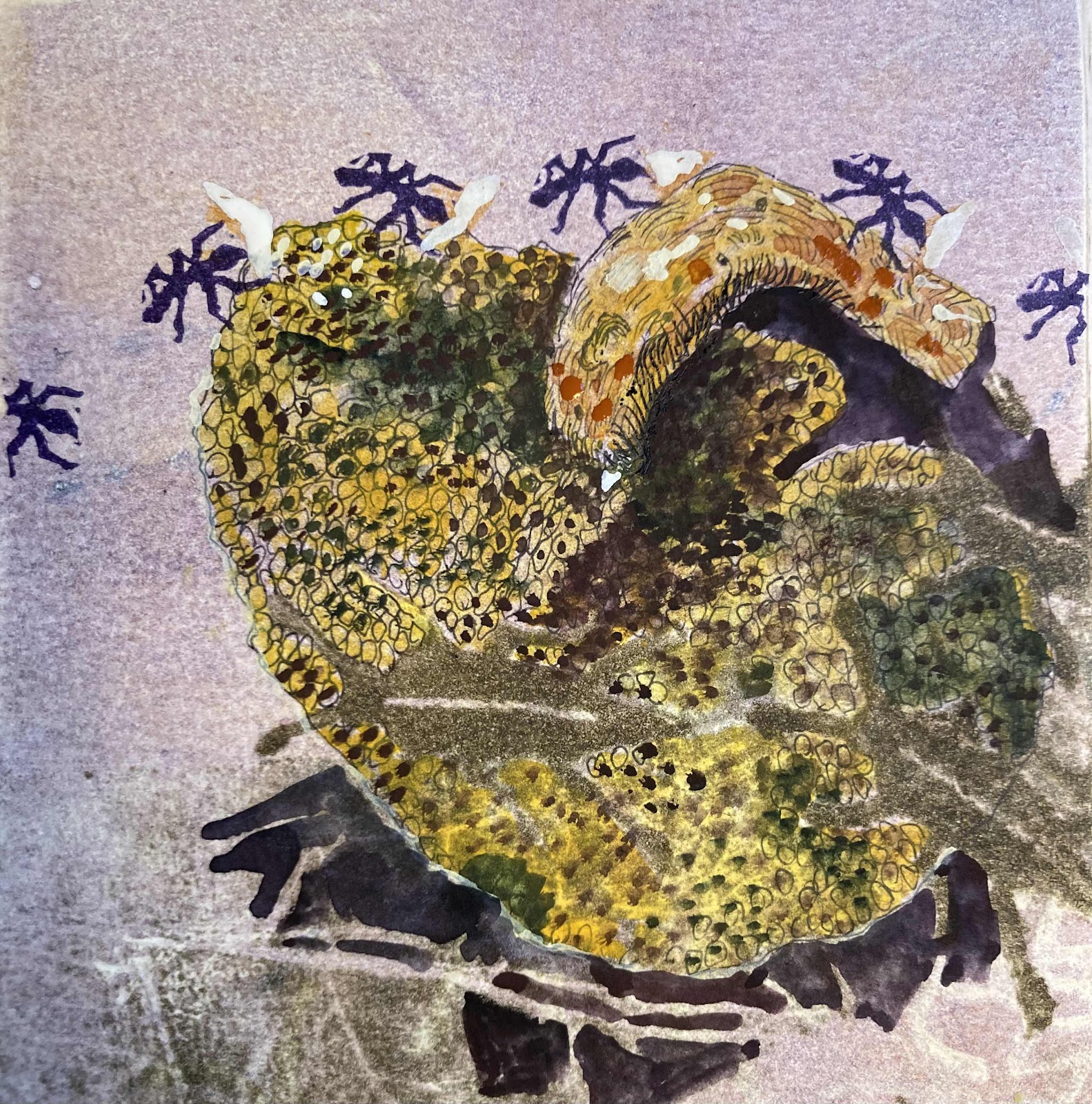
Transition, Mushroom to Ants

I’m back early from what I had intended to be my six weeks long break from posting.  Too much is going on to stay away.  The other day I was walking along one of the trails that had been filled with mushrooms of many kinds and colors a few days ago, and I realized that there are few traces left of these beauties now.  The forest is retreating into itself, and along with seed-making where flowers used to be, insects are quietly and efficiently moving parts of the retired plants and mushrooms to their own nests or into their very bodies.  

This single-file parade of large ants was removing sections of the spore tubes of a spent mushroom and marching off with the whitish pieces held like sails above their heads.  After a few feet they disappeared into a hole in the forest floor under some dry leaves. Food for the ants to store for their larvae, and at the same time, the forest floor was being cleared of debris.


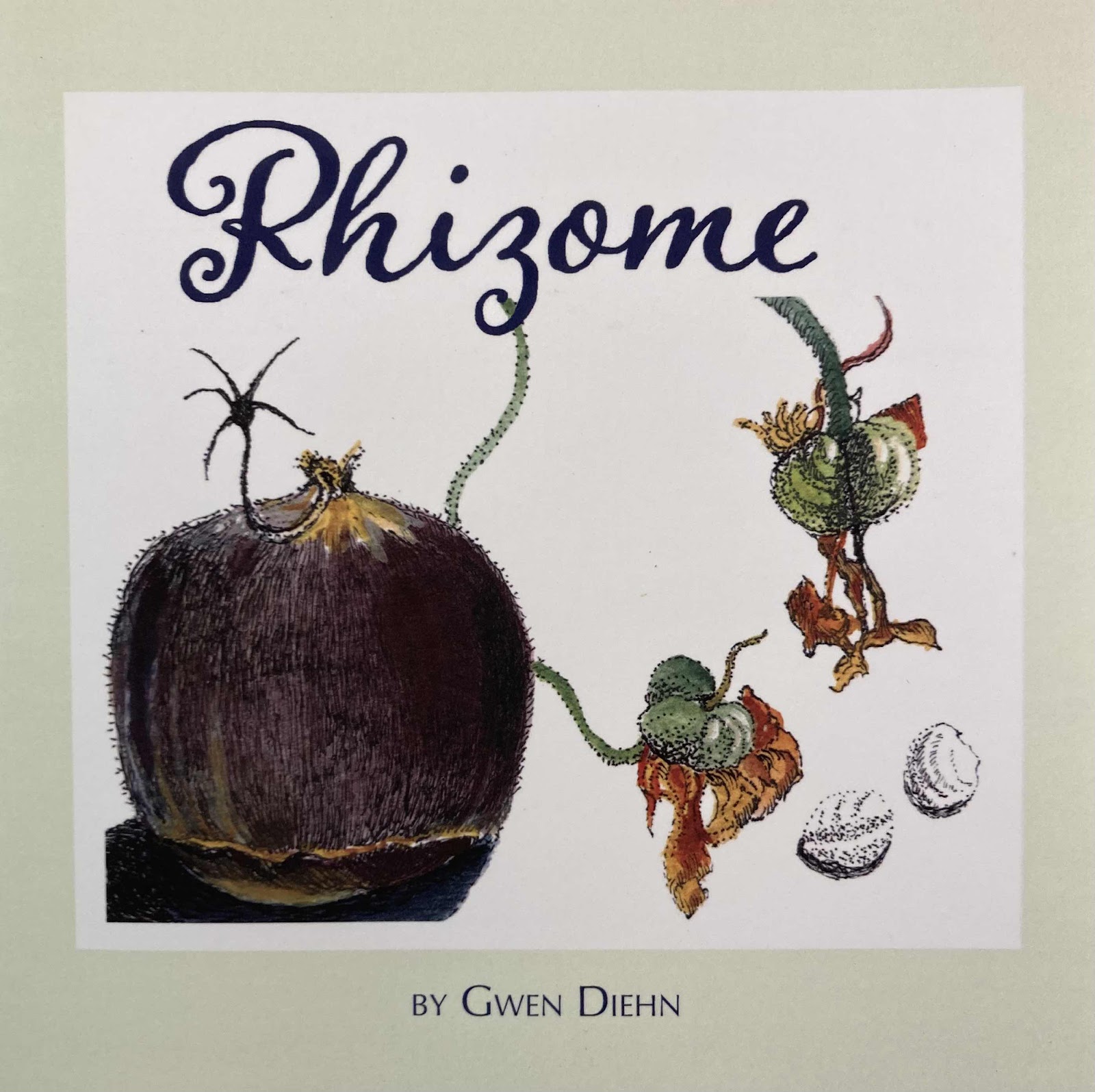
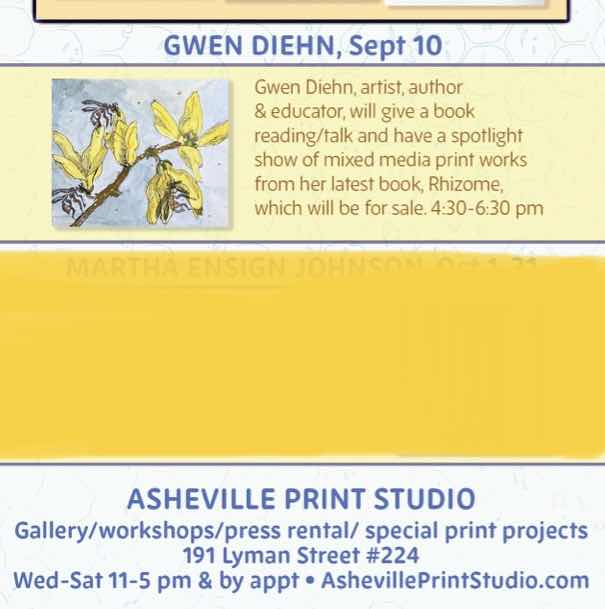
Another reason for coming out of posting sabbatical is that this Saturday is my reading and signing event at Asheville Print Studio, where the original sketches of all the illustrations in Rhizome will be on display and available for handling.  I’ll read a few short sections of the book, answer questions, and talk about how the book came to be.  There will also be copies of Rhizome on sale.


Hope to see you, local peeps!  To find APS, go down to Lyman Street in the River Arts District.  191 is one of the large brick buildings across from the biking and hiking trail along the river.  Riverview Station is the name on the building. The studio is on the second floor, and you can enter from the ground floor door  near the Tyger Tyger studio.  Go upstairs and turn right at the top of the stairs and left after you pass the restrooms.  First studio/gallery on the left.  There will be signs and arrows.  The reading starts at 4:30 pm.
#ashevilleprintstudio#naturesketching#riverarts

Wednesday, November 3, 2021

Echinacea as Magical Head Dress


Echinacea seed head worn, on the left, by a discarded Victorian china doll who faces a similar doll elevated by an elegant American chestnut burr, its velvety interior clasping the head. 

Echinacea (Family Asteraceae)  is native to North America and has been known to and used by Native people for centuries as a valuable medicine.  Long before antibiotics were discovered by western scientific medicine, echinacea was used to cure conditions ranging from colds and flu to toothaches to migraines to malaria and tumors.  Native people traditionally chewed and sucked on the root, which activated disease-fighting enzymes in saliva. 

For much more information about human-echinacea interactions as well as insect-bird-interactions, see https://en.wikipedia.org/wiki/Echinacea_laevigata

Saturday, October 30, 2021

Edibles


American chestnut from the surviving tree and nasturtium seeds forming from last week’s cut flowers.  The tassel at the top of the chestnut is on both American and Chinese chestnuts.  It’s actually the remains of the flower’s pistol, through which the pollen travels into the ovary during pollination.

The green nasturtium berries are also seed-bearing ovaries ( fruits), which grow in threes and then split apart and fall to the ground as the flower dries up.  These are the vitamin-packed caper-like seeds that early sailors snacked on to prevent scurvy.  I ate one of these green from the garden.  It was super peppery with a nasturtium undertone and a texture something like a raw green pea.  Will try soaking one in vinegar first.

I think the chestnut looks like a World Was 2 canteen in a brown velvet case.

Tuesday, October 26, 2021

Nasturtiums Seeding


Humans have loved nasturtiums for centuries for their beauty, of course, but also for their vitamin C as well as B 1, 2, and 3 and manganese, iron, phosphorus, and calcium.  Every part of this spicy little plant is edible.  Toss it in salads, float it on soups, even make little balls of soft goat cheese and walnuts and gently poke the balls into the center of the flowers for a light and healthy snack.  

The Incas taught the 15th century Spanish invaders to use  the pickled seeds as a source of vitamin C to ward off scurvy.  And if you fret about your eyesight, know that nasturtiums have more lutein than any other plant.  To make eye-strengthening snacks, drop green nasturtium seeds in vinegar for a few days, then eat them like you would capers.

Even after the plants have seeded and return to the soil, they secrete an essence into the soil, which is absorbed bu other plants, and which helps them resist attacks by pests and diseases.  And as if that weren’t enough, nasturtium nectar is nutritious for the bees and other insects that pollinate the plants.